

Industrial springs are the silent workhorses behind countless machines. They absorb shocks, store energy, and maintain motion with precision. Whether you work with compression springs, extension springs, flat springs, wire forms, die springs, or circlips, even a small malfunction can lead to downtime, reduced productivity, and expensive repairs. If you have ever faced spring fatigue, deformation, breakage, or reduced tension, this guide will help you identify the root cause, fix the problem, and prevent future damage.
Common Problems Found in Industrial Springs
Spring Fatigue and Wear
Symptoms include reduced load capacity, sagging, or permanent deformation.
The main causes are overloading, excessive cycling, and poor material quality.
The solution is to use high quality, heat treated springs and ensure the load specifications match the application.
Corrosion and Rust
Symptoms include visible rust, pitting, discoloration, or a drop in spring force.
These issues usually appear because of moisture, chemicals, or extreme temperature exposure.
Using stainless steel or coated springs, applying anti corrosion treatments, and storing springs in dry environments will help prevent this.
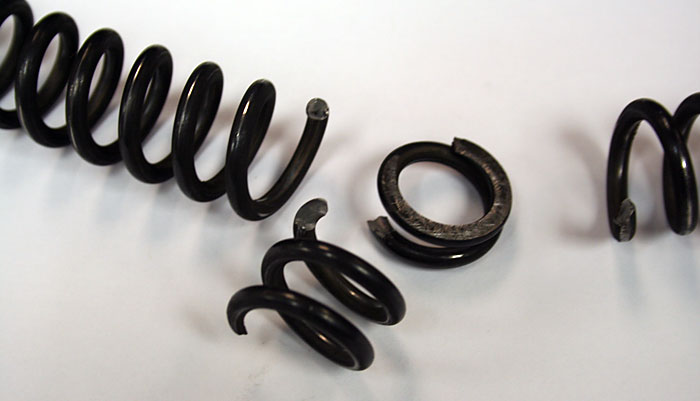
Breakage or Cracking
Symptoms involve sudden failure, snapping, or chipped portions.
Causes include improper installation, misalignment, excessive load, or internal material defects.
Rechecking alignment and choosing springs designed for the correct load and cycle life will solve most problems.
Loss of Tension or Compression
Symptoms include weak pulling, pushing, or holding performance.
Common causes include overstretching, overheating, long term static compression, or selecting the wrong spring type.
Avoiding overextension, using high cycle rated springs, and selecting the correct design is essential.
Step by Step Troubleshooting Process
First, perform a physical inspection and check for cracks, rust, deformation, or unusual wear.
Second, measure the load and deflection values and compare them with the manufacturer specifications.
Third, check for alignment issues in the installation. Misalignment causes uneven stress and early failure.
Fourth, evaluate the operating environment, including moisture, chemicals, heat, and vibration.
Finally, if the spring is damaged, replacing it with a high quality alternative is more cost effective than repairing it.
Preventive Measures for Longer Spring Life
Use the right material for the right environment. Stainless steel, phosphor bronze, and coated springs perform best in corrosive areas.
Match the load capacity accurately and never exceed the maximum rating.
Maintain lubrication in moving parts to reduce friction and heat.
Store springs in dry and controlled spaces to avoid rust and deformation.
Perform regular maintenance checks to detect early signs of wear and fatigue.
Why Quality Matters
Low quality springs may cost less at first but often fail sooner, causing machine downtime, safety risks, and higher overall expenses. Springwala manufactures precision engineered springs that follow international quality standards, ensuring long lasting performance and reliability.
Final Thoughts
Troubleshooting industrial springs is not only about solving immediate issues but also about preventing future failures. By choosing the right spring design, ensuring proper installation, and performing timely maintenance, you can improve the efficiency and lifespan of your machinery. If you require compression springs, extension springs, flat springs, die springs, or custom solutions, explore the complete range at Springwala.in. The Springwala team is always ready to guide you toward the right spring for your application.